

WINE MAKING WAS ANAHEIM’S ORIGINAL AGRICULTURAL INDUSTRY with the formation of the Los Angeles Vineyard Society. Shares in the Society were sold to Germans living in the San Francisco area. By 1859 the land was ready for vineyards to thrive and the settlers arrived in Anaheim. In 1860 they produced 2,000 gallons of wine; four years later they were producing 300,000 gallons a year. In 1863 Anaheim became the location of the first large-scale production of kosher for Passover wine in the country. In 1884 they produced at least 1.25 million gallons of wine, along with 100,000 gallons of brandy. In 1883 a disease began rapidly killing the vineyards; by 1891 only 14 acres of vineyard remained in Anaheim. Originally called the “Anaheim disease” or the “California vine disease,” it was renamed “Pierce’s disease” in honor of Newton Pierce, who studied the mysterious ailment. Pierce had suspected an insect-carried bacteria caused the disease. Finally, in 1978, the bacterium causing the disease was identified as Xylella fastidiosa.
Betzsold Studio. Courtesy of Anaheim Public Library.
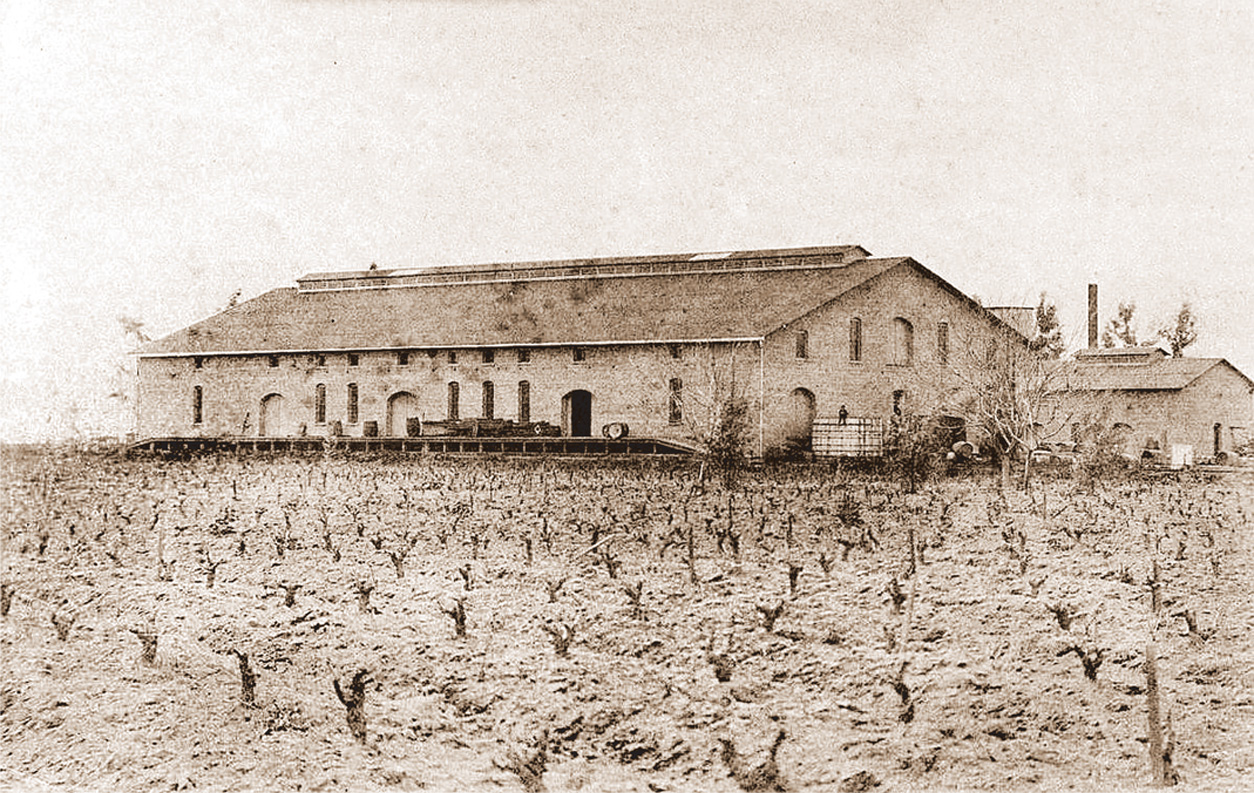
Dreyfus Winery, Anaheim, 1885
Benjamin Dreyfus & Co. Winery, built circa 1884–1885, located southwest of Anaheim near Ball and Manchester. By the time the winery was erected, the Anaheim wine industry had been decimated by Pierce’s disease. The building was later used as an orange juice cannery and was torn down in 1973. The photo shows the vineyard in the foreground, with a two-story brick winery building in background, with a figure seated atop wine vat visible in center background.
Newton Barris Pierce. Washington: Government Printing Office.
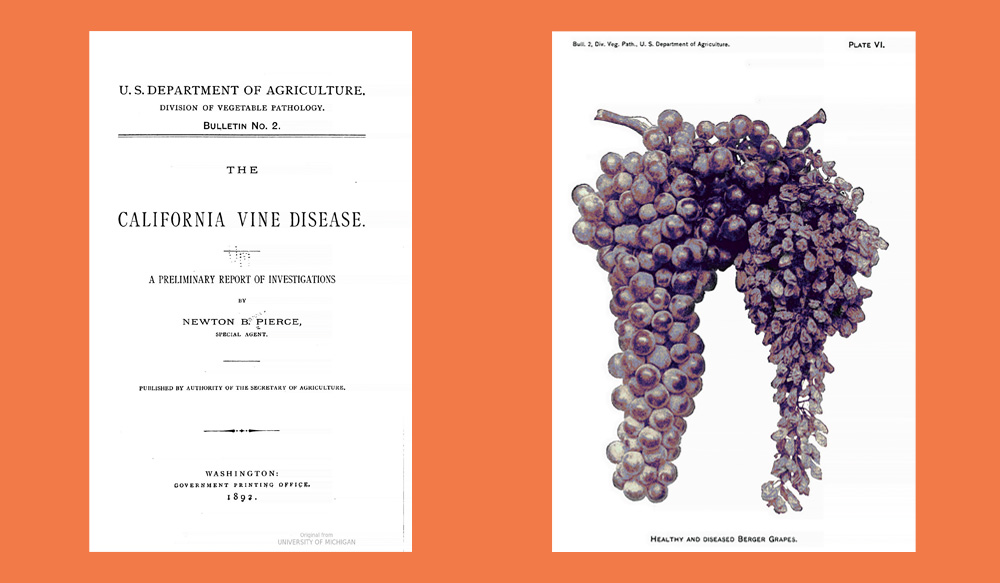
The California Vine Disease: A Preliminary Report of Investigations, 1892
A plate from the report shows the effects of the disease on Berger grapes.
Courtesy of Special Collections, USDA National Agricultural Library.
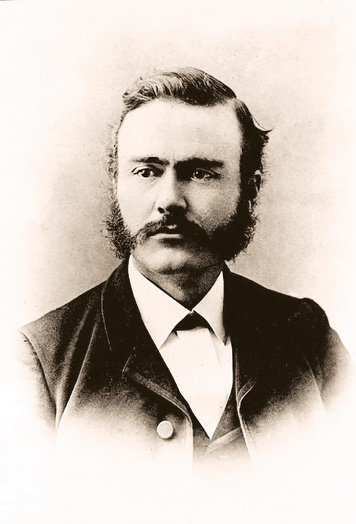
Newton B. Pierce, Special Agent, Appointed, 1890
Newton B. Pierce was an agent with the US Bureau of Agriculture. He researched and wrote about the disease which caused the crash of the grape industry in Orange County.
WHILE WINE WAS NO LONGER A MAJOR PRODUCT being produced in Anaheim, agriculture remained a vital industry throughout Orange County. In 1948, five million Valencia orange trees grew on 67,000 acres. Northern Orange County had dairy farms and cattle grazed on the Irvine Ranch and Rancho Mission Viejo. Other crops included celery, walnuts, lima beans, and sugar beets. Berries were also common. The Knott’s Berry Farm amusement park began as a roadside fruit stand on the family’s farm. By 2018, however, the Orange County Agricultural Commissioner’s office logged only 40 commercial acres of oranges.
Courtesy of the Orange County Archives.
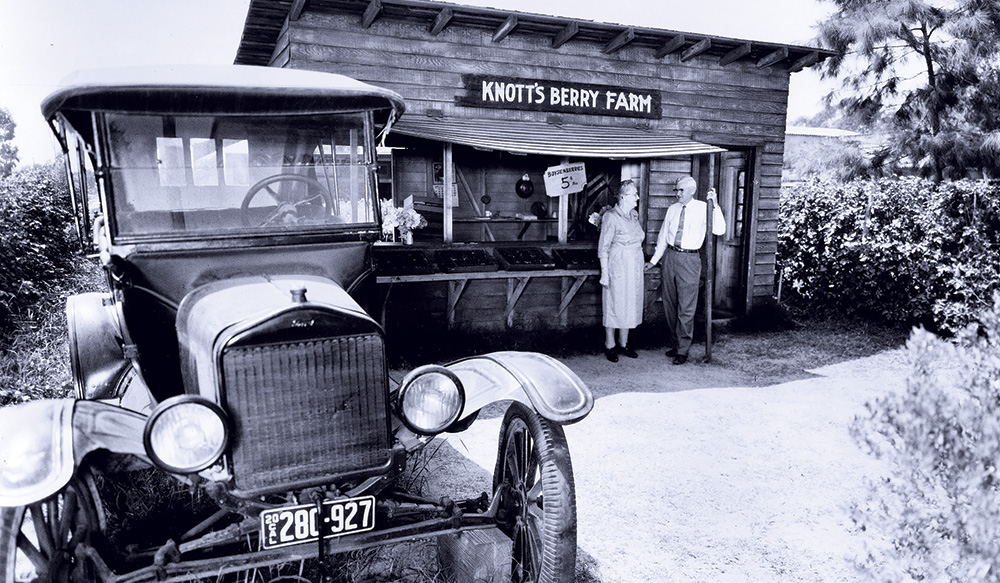
Knott's "Original Berry Stand," c. 1920
Walter and Cordelia Knott stand in front of their “original berry stand” at Knott’s Berry Farm in Buena Park. In reality, several versions of the “original berry stand” were built over the decades. The license plates on the car in the foreground are from 1920, the year the Knott’s came to Buena Park to grow berries.
Courtesy of the Orange County Archives.
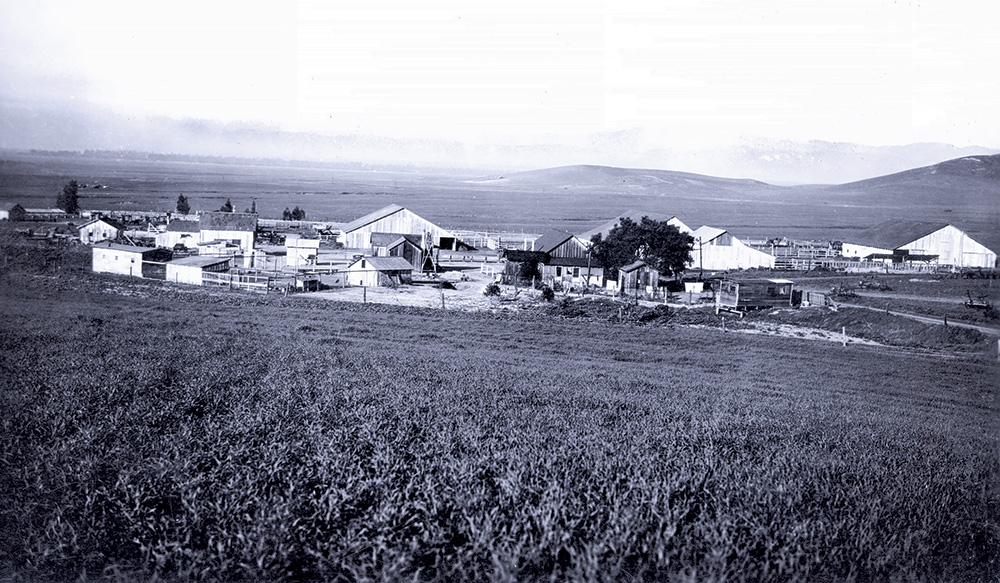
Camp Bonita, Irvine Ranch, 1937
Several buildings from this cattle camp still exist today.

Image donated to OCHS from the Tom Pulley Postcard Collection. Courtesy of Orange County Historical Society.
Part of the World's Largest Orange Grove, Fullerton, c. 1926
The Bastanchury Ranch in the Sunny Hills area of Fullerton was once considered the world’s largest orange grove. The first Valencia oranges in the county were planted in 1875 on the Richard H. Gilman Ranch, now part of the California State University, Fullerton. Soon, more farmers arrived. Valencia oranges quickly became a cash cow because they were available in the summer when Navel oranges were out of season. In 1893, the Fullerton Tribune reported that oranges from Fullerton and Placentia were commanding the highest prices in the county.
Laura Saari. April 16, 2018. Orange Coast Magazine.