

THE CONSTRUCTION OF SEVERAL MILITARY BASES during World War II transformed Orange County from a rural farming community of 131,000 people in 1940, to a sprawling urban county. During the war, 115,000 soldiers from all over the country were stationed in Orange County, many of which returned to live in the region after the war.
The Santa Ana Army Air Base (SAAAB) was the largest local base — in terms of personnel — during the war. Eight hundred structures were built on the base to support military life, including barracks, warehouses, supply offices, officer’s quarters, schoolhouses, cafeterias, a gas station, a hospital, a post office, a church, and fire station, along with many other buildings. When completed, the Santa Ana Army Air Base was almost a self-sufficient city spanning 1,300 acres.
IN 1939, AS GERMANY INVADED POLAND, President Roosevelt’s rearmament program included the expansion of the US Air Corps to train more pilots. In February 1942, the Santa Ana Army Air Base opened as part of the West Coast Air Corp Training Centers. It was the largest of the three US aviation training bases in World War II, and the only one offering three types of training: pilot, bombardier, and navigator.
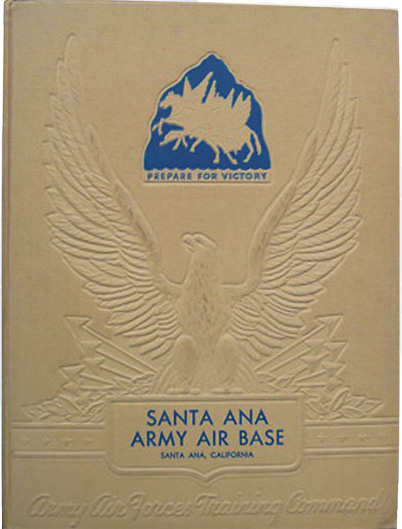
Army Air Forces Western Flying Training Command. United States Army Air Forces.
Santa Ana Army Air Base Training Command Class Book, 1943
The Santa Ana Army Air Base was a facility without planes, hangars, or runways; instead, it served as a basic training camp for new soldiers earmarked for the Army Air Forces. New troops were given nine weeks of basic training and testing to determine if they were suited to become pilots, bombardiers, navigators, or mechanics. After training, soldiers went on to other bases for training in their specialties.
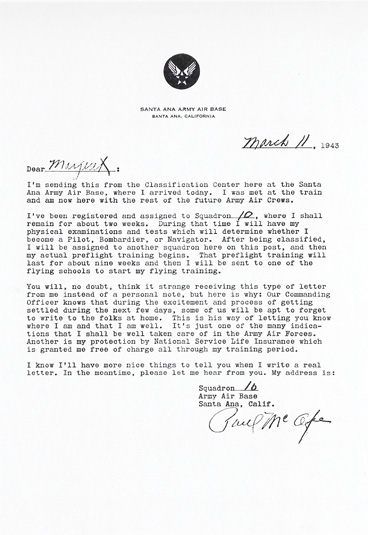
Edrick J. Miller. THE SAAAB Story: The History of the Santa Ana Army Air Base. The Costa Mesa Historical Society and The SAAAB Wing, 1981.
Letter From Cadet Classification, 1943
The first class of 2,601 cadets graduated on July 1, 1942. By the end of 1942, the annual rate of pilot graduates from the three-month classification and training program was over 45,000. To carry out this program, the Air Force had recruited a faculty of over 250 well-trained and experienced high school, college, and university teachers who later became officers in the Air Corps. The Santa Ana Army Air Base also trained soldiers as bombardiers, navigators, mechanics, radio operators, and other important jobs to support the war effort. The base reached its maximum strength by the fall of 1943, with a population of some 26,000 service members.
“No single event has been more responsible for the fantastic growth that has taken place in Orange County, California since World War II than the opening of the Santa Ana Army Air Base.”
Edrick J. Miller. THE SAAAB Story: The History of the Santa Ana Army Air Base. The Costa Mesa Historical Society and The SAAAB Wing, 1981.
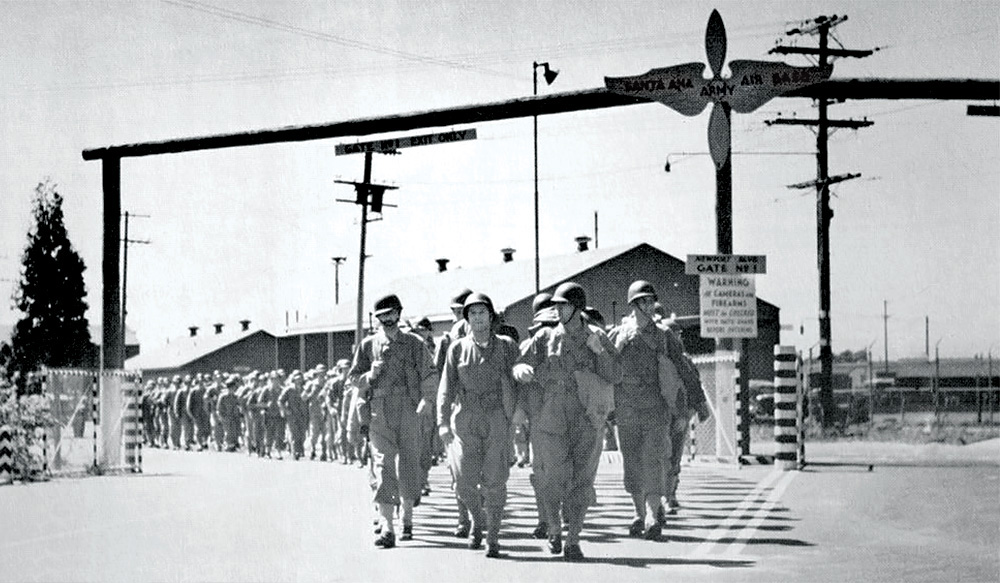
Santa Ana Army Air Base Gate, Santa Ana, California, April 23, 1944. Courtesy of the California Military Museum.
Soldiers of the 414th Air Base Squadron Depart Through Santa Ana Army Air Base's Gate 3 on a Five-Mile Hike to an Undisclosed Bivouac Site, 1943
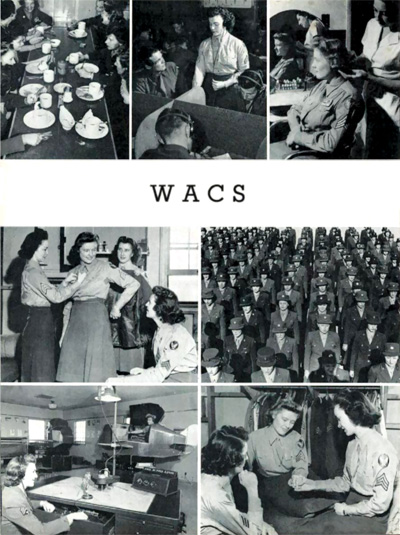
Army Air Forces Western Flying Training Command. United States Army Air Forces.
Women's Army Corp (WACS), Santa Ana Army Air Base Training Command Class Book, 1943
In November 1942, members of the Women’s Air Service Pilots (WASP) began training at the base, followed shortly by members of the Women’s Army Corp (WAC).
SANTA ANA ARMY AIR BASE WAS A SMALL CITY, including three theatres that hosted a steady stream of famous performers such as Duke Ellington. SAAAB also had its own Army Air Force Radio broadcasting studio, where the show “Uncle Sam Presents” was broadcast over the NBC network and featured celebrities Rita Hayworth, Groucho Marx, and Bing Crosby.
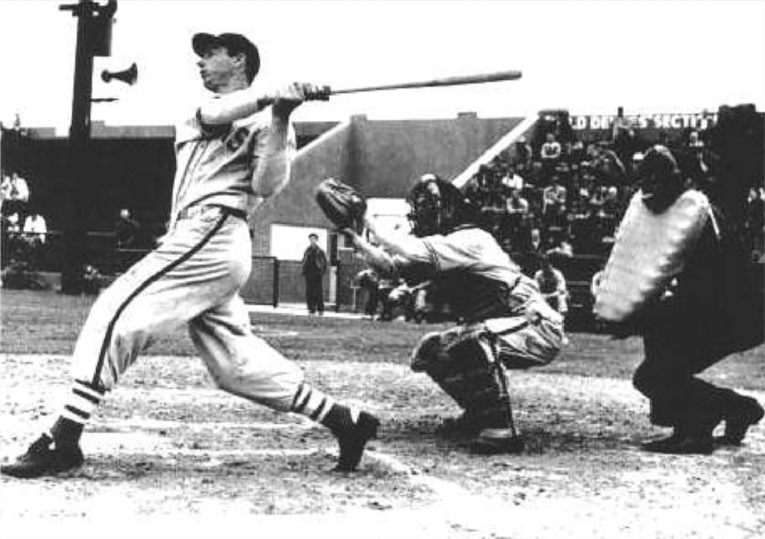
Tustin, California. Army Air Force Photograph.
DiMaggio Playing for Santa Ana Army Air Base,1943
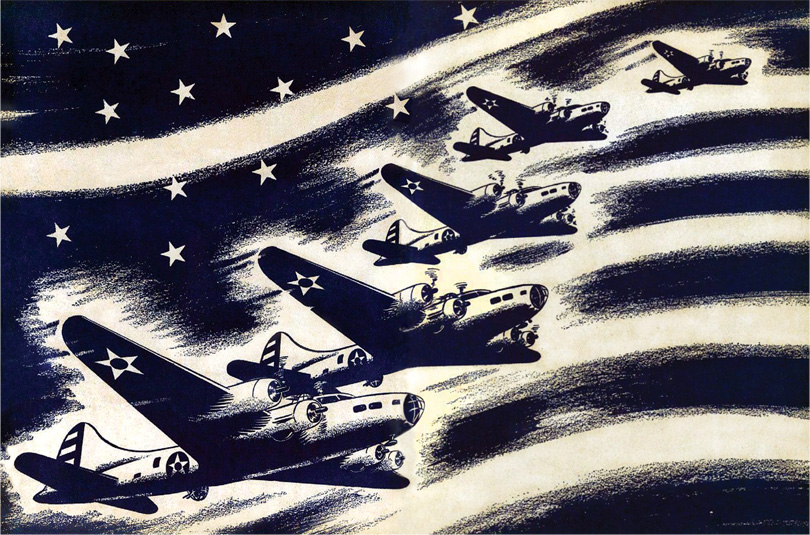
Santa Ana Army Air Base Training Command Class Book. Army Air Forces Western Flying Training Command. United States Army Air Forces.
Santa Ana Army Air Base Training Command Class Book Drawing, 1943
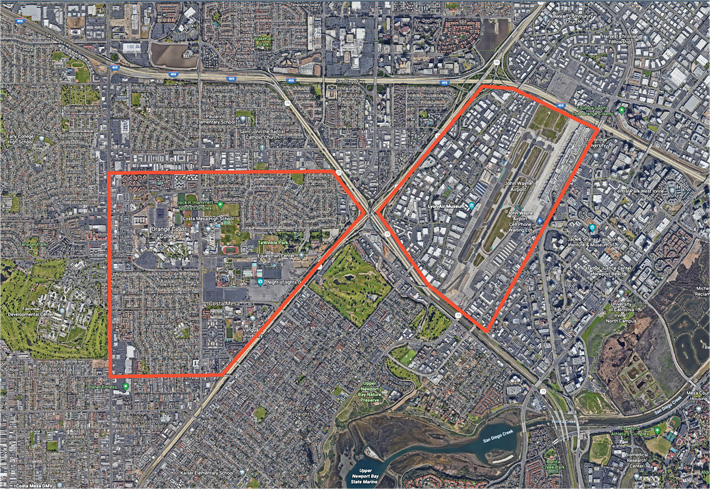
UC Irvine Libraries Design Services.
Site of Former Santa Ana Army Air Base in Costa Mesa, 2022
In 1953, the City of Costa Mesa was incorporated into Orange County. In June 1955, the former Santa Ana Army Air Base property was annexed to the City of Costa Mesa. Today, the site includes the OC Fairgrounds to the west, John Wayne Airport to the east, along with Costa Mesa City Hall, Orange Coast College, Pacific Amphitheater, Vanguard University, Air National Guard Station, and several residential and retail tracts.
ON JANUARY 31, 1948, THE WAR ASSETS ADMINISTRATION in Washington, DC awarded Orange Coast College 243 acres of land located on the western perimeter of the former 1,336-acre Santa Ana Army Air Base. The land contained 68 wooden buildings, which included the barracks used to house and train military aviation cadets, an Army chapel, an auditorium, a motion picture theater, a mess hall and a service club.
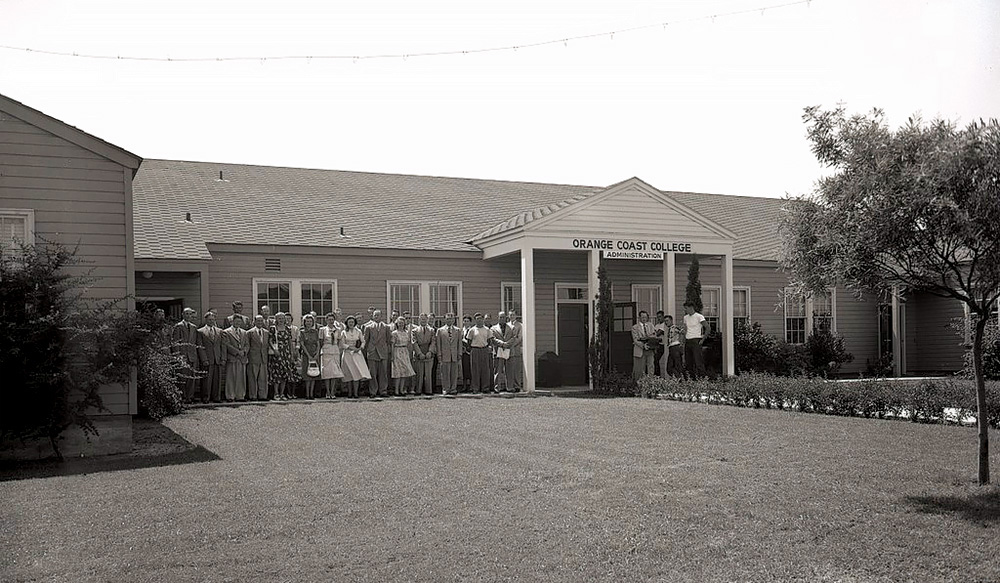
UC Irvine Libraries Special Collections and Archives.
Orange Coast College Administration Building, 1948